LIJIN ARCHIVE
At the roots of China’s
cotton textile tradition.
Passed down through generations of Li women in Hainan, this living tradition brings together spinning, dyeing, weaving and embroidering. We use “Li textiles” to reflect its full range of materials, structures and techniques.
Explore the historical connections
During the Yuan dynasty, Huang Daopo brought textile skills learned in Hainan to Songjiang, in present-day Shanghai. Her adaptation and teaching helped advance cotton textile production across Jiangnan.
European purchasing records dating from 1580 already mention Songjiang cotton cloth. Cotton cloth from the wider Jiangnan region, later widely traded as Nankeen, became popular in eighteenth- and nineteenth-century European dress.
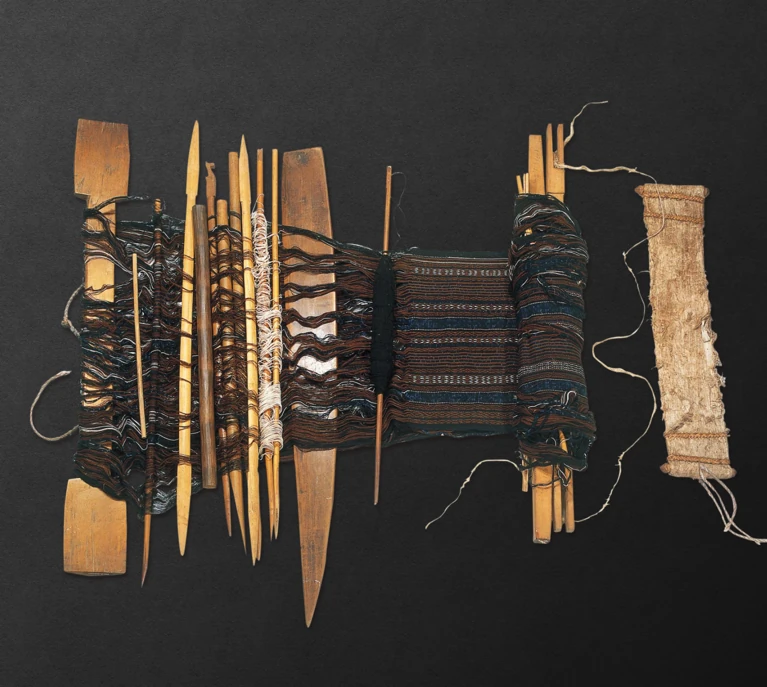
Explore the loom
1 / Bamboo & wooden toolsThe tool group supports the handling and separation of threads during weaving.
2 / Warp threadsThe lengthwise threads are held under tension and selected as the pattern develops.
3 / Woven clothThe completed section shows how interlacing turns threads into a patterned surface.
Tool reference
These components hold the warp, separate and select threads, and pack the weft into the developing cloth.
- Warp-tensioning and cloth-winding beam
- Holds tension and takes up woven cloth.
- Cloth-clamping bar
- Secures the cloth edge.
- Warp-support rod
- Supports the arrangement of warp threads.
- Width-setting rod
- Helps maintain the intended width of the warp.
- Heddle rod
- Raises a group of warp threads to form a shed.
- Shed tube
- Keeps groups of warp threads separated.
- Warp-spacing strip
- Helps maintain warp spacing and order.
- Pattern-picking blade
- Selects threads for pattern formation.
- Beating sword
- Packs the weft into the developing cloth.
THE DNA OF LI TEXTILES
Four relationships
shape Li textiles.
Together, they reveal how a textile tradition can hold cultural memory while leaving space for human judgement, invention and change.
01 / RULES & FREEDOM
The loom sets the rules. The maker finds freedom within them.
Warp and weft establish a grid; materials and technique set its possibilities. Within these constraints, the maker chooses form, proportion, colour and rhythm.
In this textile, gestures and shared customs become geometric figures. Patterned bands bring the wedding celebration into an ordered whole.
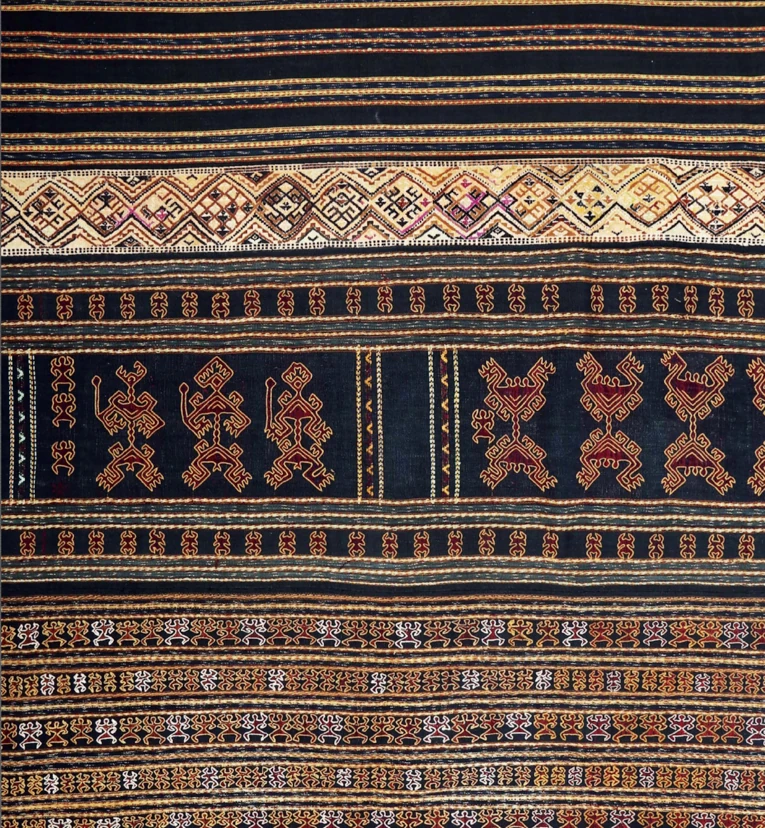
BodyGestureLineGeometry
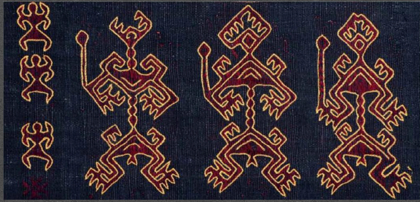
Gesture becomes geometry.
Bent limbs, stepped lines and raised torches preserve recognisable actions in abstract form. What is removed is detail. What remains is identity.
Explore the motif detail
02 / SYSTEM & INDIVIDUALITY
Knowledge is shared.
Making is personal.
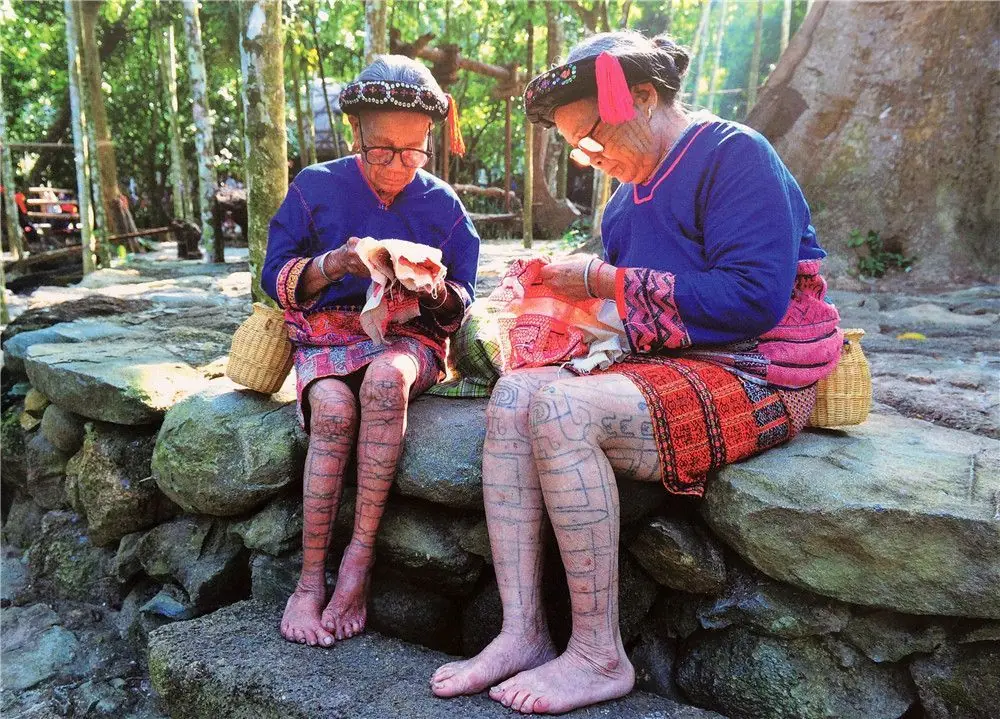
Techniques, motifs and ways of learning are passed between generations and within communities. Each textile takes form through a particular maker’s memory, hands and judgement.
Learning through observation and practice carries knowledge forward. Experience guides how it is realised in each piece.
The system is inherited.
The textile is realised by an individual.
03 / REPETITION & VARIATION
A few forms.
Endless variation.
Motifs return through changes in scale, direction, colour and combination. A limited vocabulary can generate remarkably different compositions.
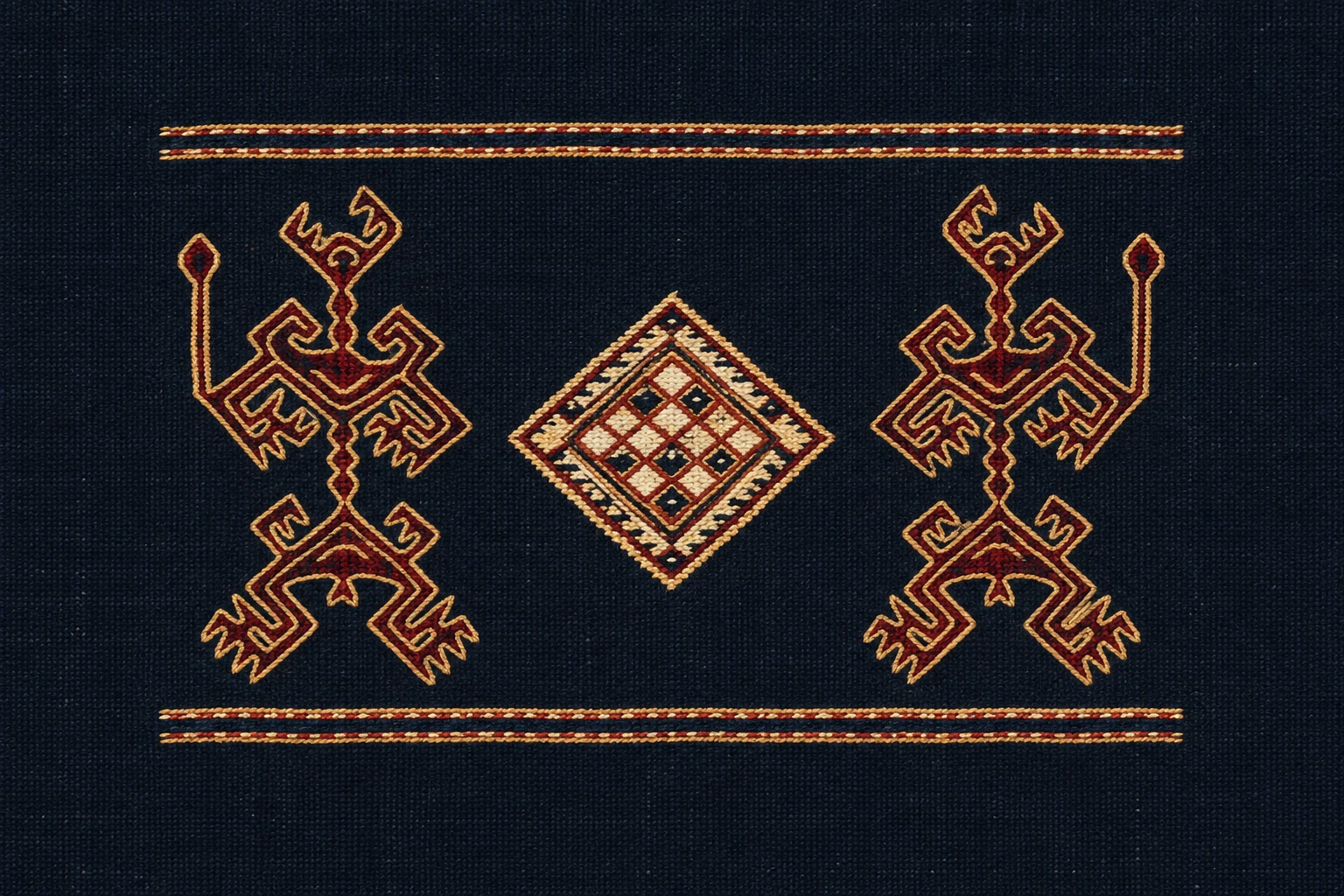
Contemporary composition studies based on the textile’s figures, geometric motifs and borders.
Repetition is not duplication.
The system repeats. The hand responds.
04 / STRUCTURE & BODY
The body is part of the loom.
A backstrap loom, bamboo and wooden tools, and the maker’s body work as one system. Pattern takes shape through the coordination of tension, thread selection and practised judgement.
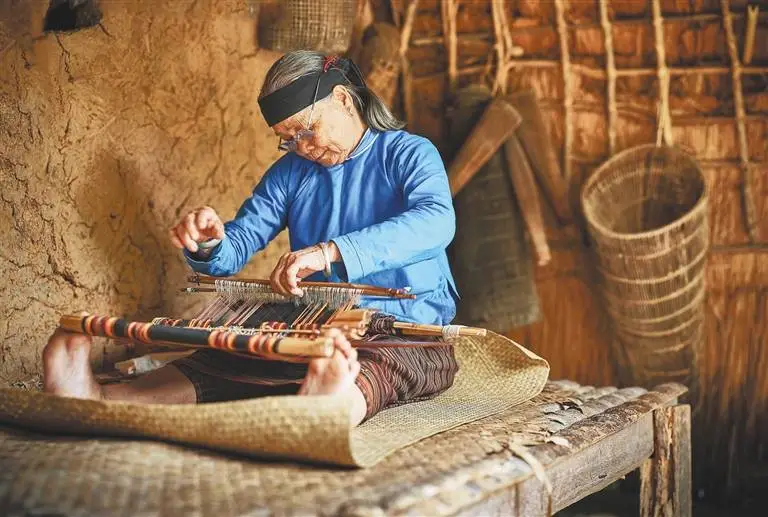
- TensionBody
- Posture and movement regulate the pull of the warp.
- SelectionHands
- The hands select threads and guide their interlacing.
- SequenceMemory
- Remembered patterns guide the work from one row to the next.
- FeedbackSight & touch
- Seeing and feeling reveal changes that call for adjustment.
KNOWLEDGE IN THE PRESENT
Why does something this old feel so contemporary?
Because the questions within Li textiles have never disappeared.
- How much freedom can exist within a rule?
- How can a system leave space for the individual?
- How can repetition continue to produce difference?
- Where does the tool end and the body begin?
These are ancient textile questions.
They are also contemporary design questions.